
Search Robertson County Jail Mugshots
Robertson County Jail Mugshots usually start in Springfield, where the sheriff's office and the county seat keep the local trail close to the source. A short request with a name, a date, and one clear clue is easier to match than a broad search, and it helps the office sort the right photo from the rest of the file. If you are checking a recent matter, start with the county office and keep the question focused on the image and the entry that go with it. That keeps the first call simple and avoids a long exchange that does not help either side.
Jail Mugshots
The Robertson County Sheriff's Office at 701 S. Brown St in Springfield is the main local source for the file. The office is full service, which matters because it gives the county a clear records path behind the detention side. If the person is still held, the local list is usually the first place to check. If the person has already moved on, the same office still gives the cleanest starting point for the next step. Springfield matters here because it keeps the request tied to one place instead of spreading it across several offices.
The best request stays plain. Give the full name if you have it, then add the date when possible. That helps staff find the right line and keeps the response tied to the correct note. A photo by itself is not enough; the entry and the date give the image its place in the paper trail. If you are unsure about spelling, ask for the closest match and check the response against the date instead of guessing.
How to Search Robertson County Jail Mugshots
Start with the sheriff if the matter is recent. Springfield is the center of the local file, so the office there is the best place to ask for the line that matches the name. A request with the person and a short date range is easier to sort than a broad question. Small details help the office find the exact record instead of a near match, and that saves time on both sides. It also gives you a better shot at a clean response the first time.
If the local file is not online, use the Tennessee Public Records Act path and ask for inspection or a copy. Say whether you want the photo, the entry, or the full file. If the person has already been moved or sentenced, the county paper trail may sit beside a court file or a state history note, and the local entry still helps explain where the case began. A clear request is usually faster than a detailed one, as long as it points to the right person and the right day.
The image below comes from the Tennessee Department of Correction offender search back end at tn.gov/correction. It helps when the county matter has moved into state custody or when you need a second look at the current status.
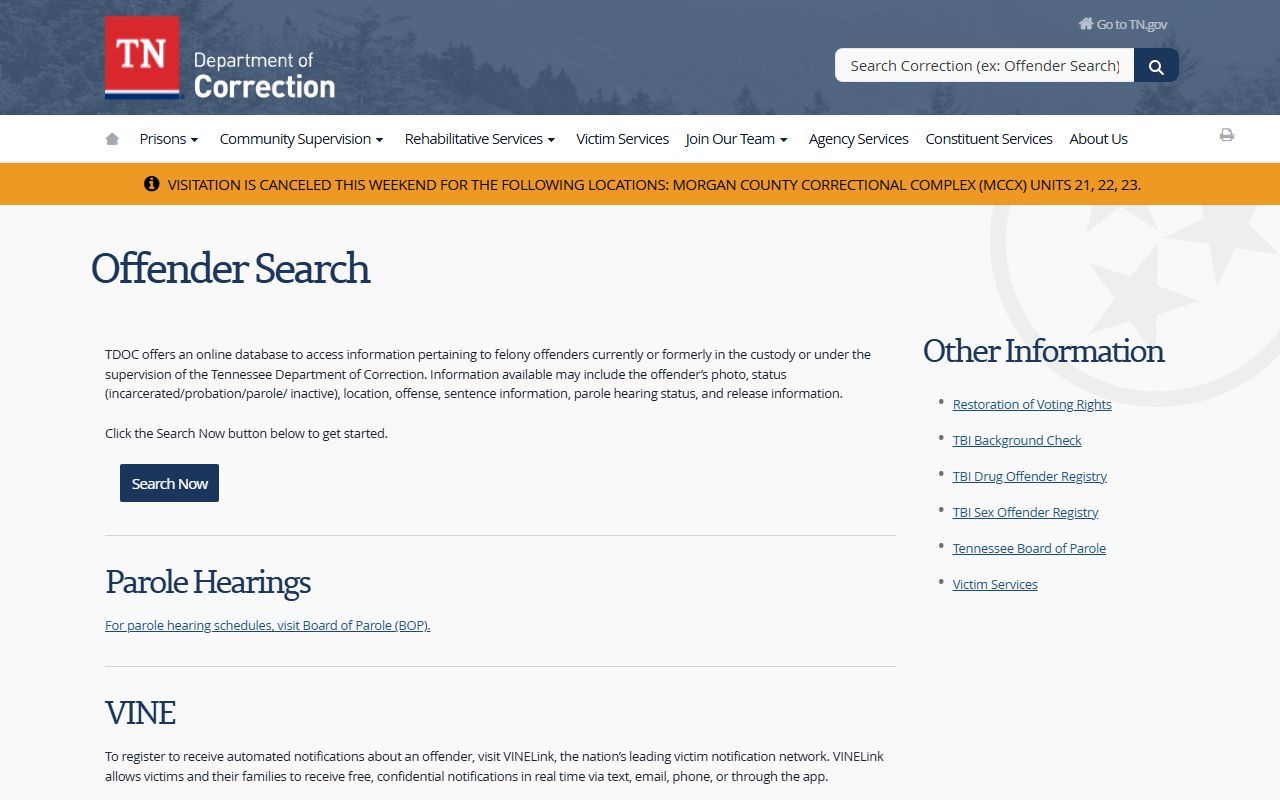
That state resource does not replace the county source, but it can keep the search moving after transfer or sentencing. The county start still matters because it points to the earlier stage and the paper trail that came before state supervision.
Jail Mugshots
Robertson County records stay easiest to sort when the booking trail stays in Springfield. That gives the search a single local center and keeps the county office, jail, and follow-up file aligned. If you need a booking photo, start with the sheriff. If you need the next record layer, the same city can point you to the right office. Springfield makes the search simpler because it keeps the first call and the follow-up in the same place.
The Office of Open Records Counsel at comptroller.tn.gov/office-functions/open-records-counsel and the Tennessee Code Annotated page at tn.gov/content/tn/tccours/secretary-of-state/legislative-resources/tennessee-code-annotated.html explain the access frame. They do not hold the photo, but they help if a request needs to be narrowed before release. A request with one person and one date is usually easier to read than a long, loose description.
Robertson County Records and Search Tips
The Tennessee Bureau of Investigation keeps TORIS access and criminal history resources at tbi.state.tn.us/toris and tbi.state.tn.us/toris-search. TDOC at tn.gov/correction and VINELink at vinelink.vineapps.com/search/TN/Person help if the person leaves county custody or changes status after the local phase. Those are the tools that keep the same search moving after the county step is done.
Use the full name first, then add the date if you know it. That keeps the request focused and helps the office match the right Springfield file. If the person is not in the live list, ask whether the paper trail moved to court or state custody. Keep the local office in view even after the response comes back, because that is the part that shows where the search began.
When a reply is short, keep your notes short too. Write down the office name, the date you asked, and the exact words you used. That makes it easier to compare a later reply against the first one. If one part of the answer is missing, ask for the missing piece instead of restarting from the top. Small follow-up questions are usually better than a new broad request because they stay closer to the source and they are easier for staff to handle. A clean note also helps if you have to come back later and check whether the same person appears in a different place or under a slightly different spelling.